Home › Security Architecture & Engineering
Brewer-Nash Model Explained — Security Models (Part 5)
Security Architecture & EngineeringCISSP
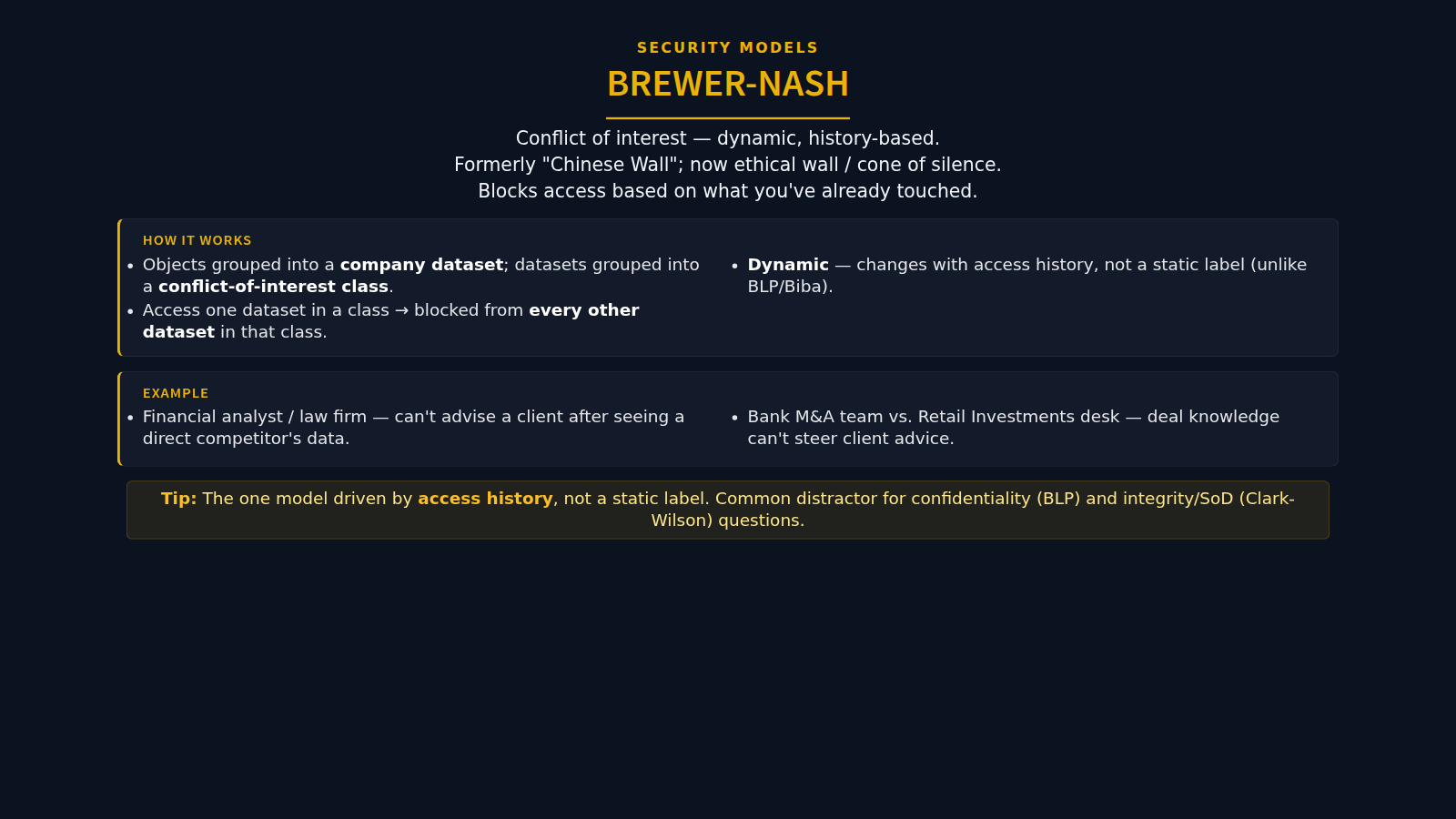
Brewer-Nash is the odd one out in the Security Models series — it's not built around a confidentiality or integrity level, it's built to stop conflicts of interest. In Part 5, we cover how its dynamic, access-history-driven restrictions work, the naming change from "Chinese Wall" to "ethical wall," and where it shows up as an exam distractor.
What you will learn
- What the Brewer-Nash model is and the conflict-of-interest problem it solves
- Conflict-of-interest classes and company datasets — how access gets grouped
- Why this model is dynamic and history-based, unlike Bell-LaPadula or Biba
- The real-world financial-analyst, law-firm, and bank-department ethical-wall examples
- The naming shift from "Chinese Wall" to "ethical wall" / "cone of silence"
- How Brewer-Nash gets used as an exam distractor for confidentiality and integrity questions