Home › Security Architecture & Engineering
Key Management Explained — Cryptography (Part 6)
Security Architecture & EngineeringCISSPSecurity+
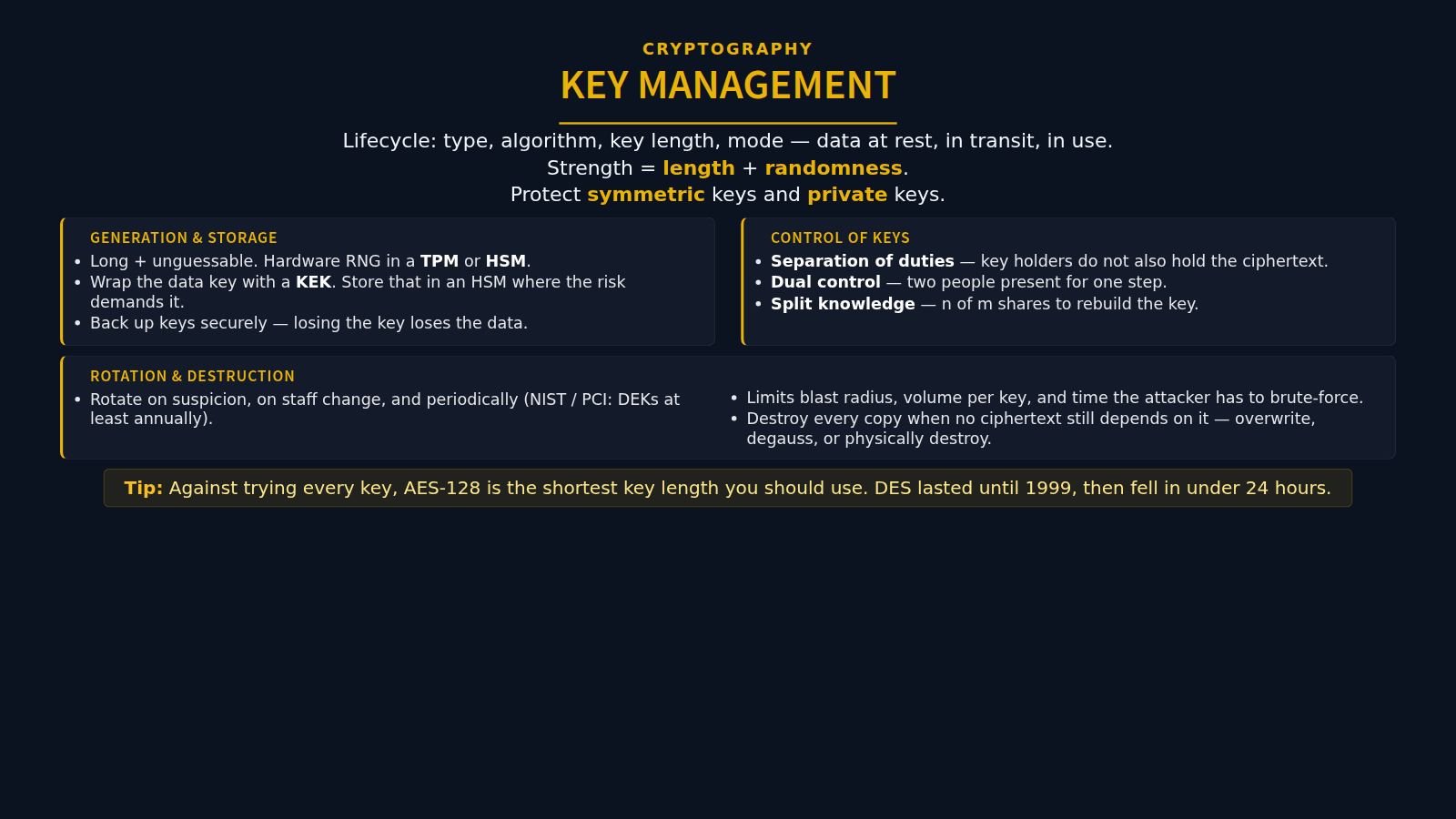
Cryptography is only as strong as the keys: length plus randomness, then generate, store, rotate, and destroy. In Part 6 of our Cryptography series, we cover TPMs and HSMs, KEKs wrapping DEKs, separation of duties vs dual control vs split knowledge, and why keys get rotated.
What you will learn
- The cryptographic lifecycle — type, algorithm, key length, mode; data at rest, in transit, in use
- Why strength is length plus randomness
- Hardware RNGs in TPMs and HSMs, and wrapping a data key with a key-encryption key
- Separation of duties, dual control, and split knowledge — related, not the same
- When and why to rotate keys (NIST / PCI: data-encryption keys at least annually)
- How to destroy a retired key so it cannot be recovered
- Why AES-128 is the shortest key length you should use against trying every key, and what happened to DES in 1999